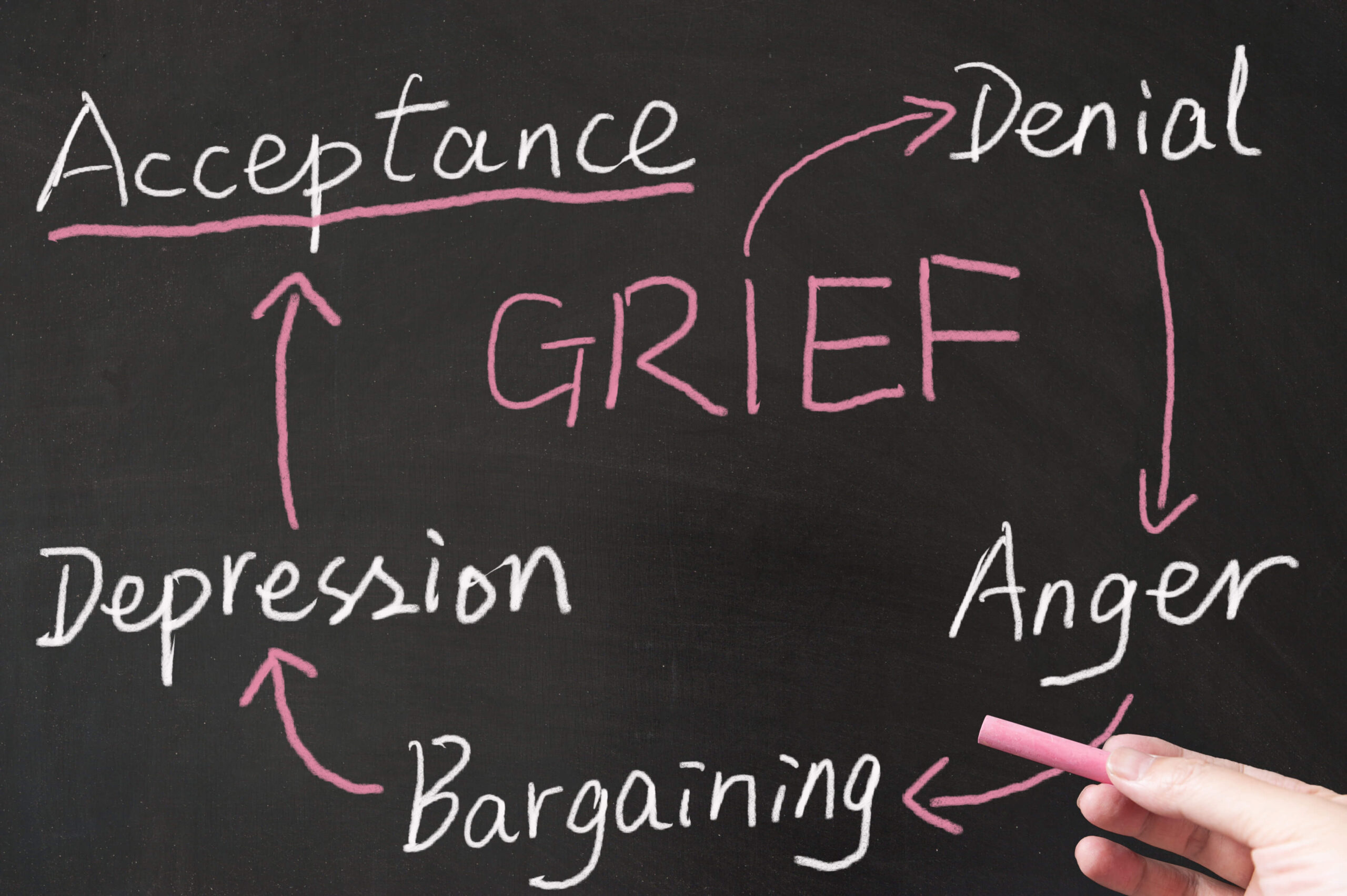
I am a licensed mental health counselor in Boca Raton, Florida and I provide psychotherapy for individuals struggling with grief and loss. When a beloved person passes away, we are often left in such a state of pain and confusion because what we’re experiencing is so unlike any other experience that we can compare it to. It can and often does feel like the ground has fallen out from under us, leaving many to struggle with coping–often even turning to maladaptive coping patterns such as substance abuse or negative behavioral patterns.
We wonder if what we’re experiencing is normal, or if we’re going crazy. People will often ask If they’re experiencing the grief and loss correctly. All of these experiences are in fact normal. I believe that we are a death denying culture, and that we don’t do a lot to socialize young people around mortality. Who is responsible for teaching us about death? When I ask this question of my grief therapy clients, most cannot recall ever having had this conversation with an adult at any point in their childhood. My belief is that this lack of social preparation has some bearing on the way we experience mortality later in life when people around us pass away.
On Death and Dying
In 1969, grief and loss researcher Karen Kübler-Ross released her famous publication called On Death and Dying. This publication gave us what is probably the most repeated and best-known conceptualization of the grieving process. This is where we were introduced to the five stages of grief: denial, anger, depression, bargaining, and acceptance. According to the theory, these emotions don’t necessarily have to occur in order so that a person who is grieving can experience them in any order.
Criticisms of the 5 Stages of Grief
Here’s one of the problems with this. The book Death and Dying is based on Karen Kübler-Ross’s research on people who were dying from terminal illnesses. So, these phases of grief were experiences that terminally ill people were having as they were facing the inevitability of their own death. Certainly, the experiences of denial, anger, depression, bargaining, and acceptance certainly make sense for these people. I can accept wholly that this is what a person experiences as they’re coming to grips with their own end of life. It was a landmark theory based on a body of research that changed the zeitgeist and the way in which we even talked about mortality.
The book became a bestseller. It is frequently quoted and also became our behavioral conceptualization of what grief was in our society. So, Kübler-Ross is rightfully credited as the original pioneer in this area. Here’s where the problem arises. These stages of grief: denial, anger, depression, bargaining, and acceptance seem to be universally accepted as the phases of grief that all people experience after the loss of a loved one. So, we’re accepting that the experience of a terminally ill individual is the same thing as losing a loved one. In my mind, I think we’re talking about two very different things.
The Experience of a Terminally Ill Person is Different than Someone Grieving a Loss
The experience of a person with a terminal illness, who is facing their own mortality and dealing with their own end of life issues, is not the same thing as a bereaved person who has just lost a parent, or a child, a spouse, a close friend, coworker, or relative. Yet, for the past 50 years, these stages of grief have been adopted and accepted even among behavioral health professionals as the universal grief experience. I go back to this idea of a death denying culture and I think to myself that it would make sense. The first time we are given something that can somewhat explain and conceptualize the phenomenon of the grieving process, we’re quick to accept it. It was an easily digestible idea that was easy to understand.
So, for the past 50 years, this notion about stages of grief had gone unchallenged in the mainstream discussion about loss. At the same time, the researcher or the book did not fall short in any way. It’s just that our society universally adopted this idea that was normed on the wrong population.
So again, the experience of a person with a terminal illness who’s facing their own mortality is not the same thing as the experience of a loved one who is dealing with a recent loss. In order to fully understand the grieving process, we have to be able to discuss what loss and mourning really are. I’ll be addressing those in my next post. If you are struggling with grief, loss, or other difficult emotions, contact me to learn more about how therapy can help.